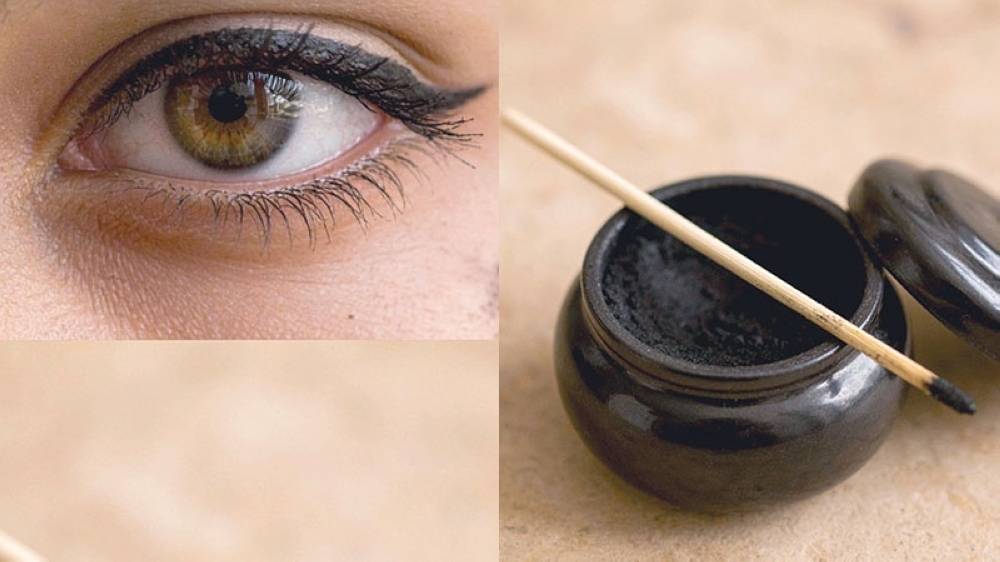





For generations, passed down from grandmothers to daughters, kohl goes beyond beauty and cosmetic use. It has long been believed to protect the eyes, and in some households, it is still applied to newborns as part of traditional care. But two scientific studies conducted in Oman reveal that behind this traditional practice are potentially serious consequences, examining what is actually contained in Omani-made kohl.
- The First Scientific Look at Omani Kohl -
Despite the fact that the practice of using kohl for babies is still common and widespread across many areas in Oman, a scientific study examined the practice more than twenty-five years ago.

In 1998, researchers Hardy, Vaishnav, Al Kharusi, Sutherland and Worthing published “Composition of Eye Cosmetics (Kohls) Used in Oman” in the Journal of Ethnopharmacology. The study analysed 47 kohl samples, the majority collected from within Oman, alongside eight comparison samples from other countries, using X-ray powder diffraction and scanning electron microscopy.
It was found that the main component of five of the 18 Omani-made kohls was galena (PbS). Of the remaining 13, 12 were based on amorphous carbon, while one was based on hematite (Fe₂O₃). For the remaining samples made in other countries, the results were not better than the concerning findings for the Omani-made ones, as they were found to contain one of the following as the main component: galena, minium (Pb₃O₄), amorphous carbon, magnetite (Fe₃O₄), zincite (ZnO), calcite (CaCO₃) or sassolite (H₃BO₃).

The researchers stated that one purpose of their study was to alert physicians that, despite kohl’s innocuous appearance, it may contain lead, and that children treated with traditional remedies could be presenting with undiagnosed lead exposure.
- A Closer Look, Nearly Two Decades Later -
A follow-up study, “Comparative Chemical Analysis of Some Traditional Omani-Made Kohl,” was published in 2017 in the journal Toxicological & Environmental Chemistry. This study examined 14 different types of Omani-made kohl collected from various locations around the country, using X-ray powder diffraction, scanning electron microscopy, energy-dispersive X-ray microanalysis, and inductively coupled plasma mass spectroscopy.
This study found that six of the kohls were mineral-based. Four of these, which are locally known as lasif, cold ethmid, hot ethmid, and original ethmid, contained high levels of lead in the form of galena.
The other two, known as red ethmid and black ethmid, were composed mainly of iron compounds (hematite, magnetite and goethite). The remaining eight samples were amorphous carbon-based. Of these, the study specifically noted that one was produced by charring date stones, while the rest were soot collected from burning various materials.

- What the Researchers Said About Risk -
The two studies focused primarily on determining whether kohl used in Oman was lead-based and on warning physicians that children exposed to lead-based kohl may show symptoms of lead poisoning without an obvious cause. However, published studies also show a pattern of concern that runs through the wider regional and international research on traditional eye cosmetics.
A meta-analysis published in the Pan African Medical Journal, which pooled data from 14 human observational studies conducted across multiple countries, found a statistically significant association between kohl exposure and increased blood lead levels in children, though the authors noted substantial variability between the studies reviewed.
Oman Observer is now on the WhatsApp channel. Click here